
Stop applying randomly. Choose deliberately
Most job searches don’t fail because you’re not good enough.
They fail because you’re applying to roles you don’t even want.
If you’re not clear on what you’re looking for, you’ll waste more time on applications and interviewing for roles that aren’t even a good fit.
So I built a system that helps you get where you want to go faster with fewer applications, leading you to better roles.
Now that you know the outcome we’re after, let’s talk about the problem.
Most career advice starts with some version of:
“Look at your background. What roles are you a good fit for?”
That’s backwards.
Your background doesn’t get to decide what you want next.
If you always start with “what am I a fit for?”, you end up optimizing for what’s familiar.
Not for what’s right for you.
Today I want to walk you through the Role Clarity System I’ve built and have been using with clients to help them get clear on the direction they want to go, and how to think about any tradeoffs they need to make on the way there.
The Role Clarity System has two parts.
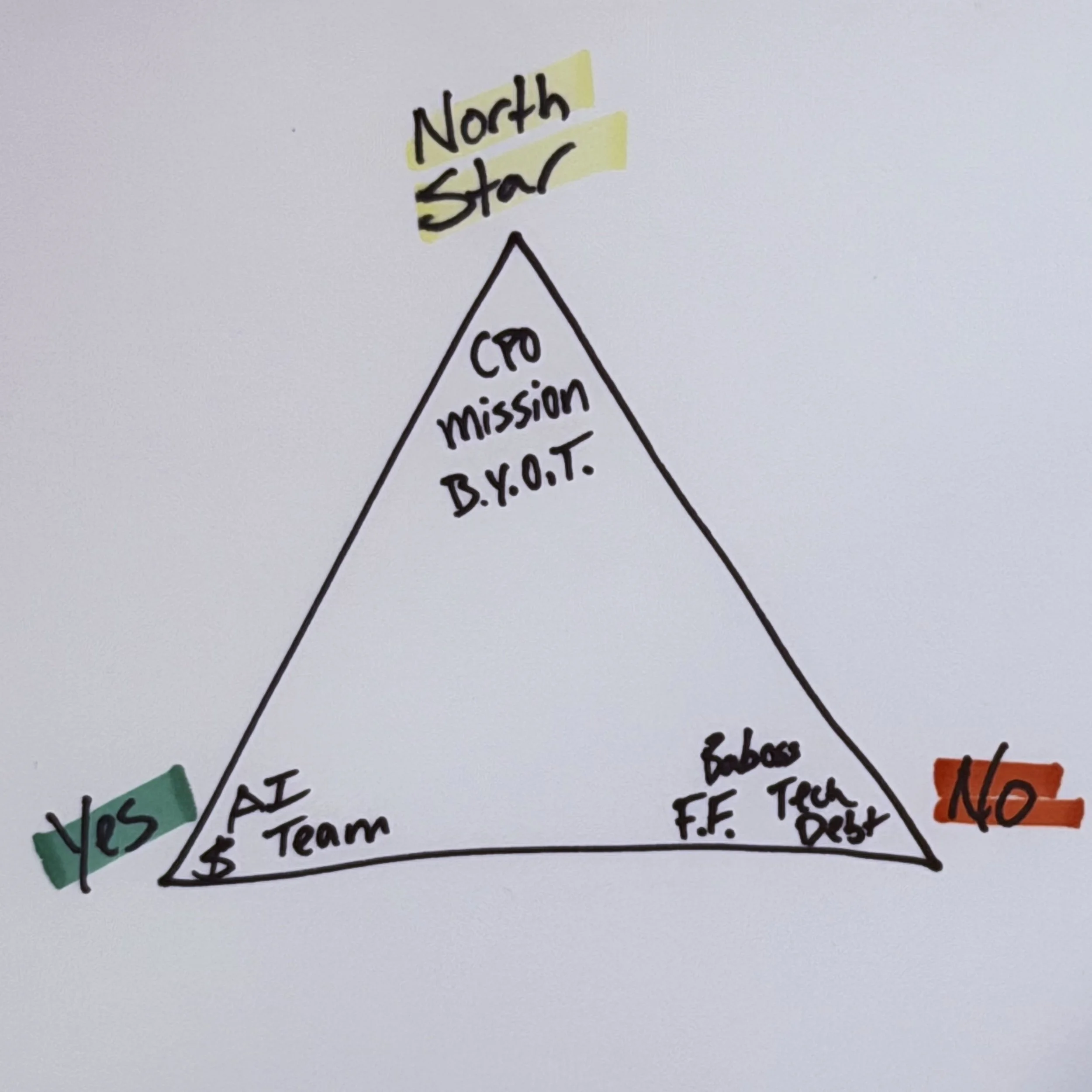
Yes / No / North Star
Let’s start with the direction you want to go. Most people have some idea in their head about where they want to go but they never write it down.
If it’s not written down, it’s going to change like the weather—based on something random like air pressure or maybe what you’ve been doom scrolling about on LinkedIn.
So this part is simple, but most people skip it. You won’t.
Here’s how it works.
Start with the Yes
What do you want more of? What makes you really happy about your job? What do you actually enjoy doing?
This is the stuff that gets you going.
For me, it’s building things, helping clients have that moment of clarity, guiding groups of people, and celebrating client wins.
If you can’t say what “good” looks like, you won’t recognize it when it shows up.
Then write down the No
What are you not willing to repeat? What do you really hate about where you’ve worked before? What do you want to avoid at all costs?
This is what you want to suss out so you don’t end up somewhere that doesn’t move you forward.
For me, it was the Monday morning disruption. I come in rested, energized, with a plan for the week, and some boss smashes my inbox with some email that sets teams on fire for the week.
If you’re not clear on what you want to avoid, you’ll probably face it again.
Top it off with your North Star
What’s the bigger career outcome you’re heading towards? How must the next job move you closer to that? What will you anchor all this work towards?
Think about this like the strategy work you want to do, but applied to you.
For me, it’s helping as many people as I can get that career outcome they want.
So that’s part 1.
For you, maybe it looks like this:
The Priority Ladder
Once you’re clear on the direction you want to take your career, you need to be deliberate about what’s non-negotiable and what’s nice-to-have.
Hiring Managers do this before they post a role, and you should too.
Every decent role will look like a mixed bag.
Having a priority ladder is how you stop deciding based on vibes.
It’s really easy to do this, so don’t skip it either.
Start by listing up to 10 attributes that matter.
Then stack-rank them.
Rungs 1–3 are your non-negotiables.
Rungs 4–7 are differentiators.
Rungs 8–10 are nice-to-haves.
If “learning from a great product leader” is #2, but “remote-first” is #9, you now know what you’re trading.
That’s the whole point.
For you, maybe it looks like this:

Most people think the fastest way to get hired is to widen the net.
It’s often the opposite.
The fastest job searches I see are the most selective ones.
Selective doesn’t mean picky.
It means clear.
So you stop wasting times on roles that aren’t a fit and start getting where you really want to go.
Good luck this week.
James